Choose verifiability over guesswork
The Reality of Verifiable Intelligence and why "good enough" is a risk

The Preflight7 team
Founding team
Insight
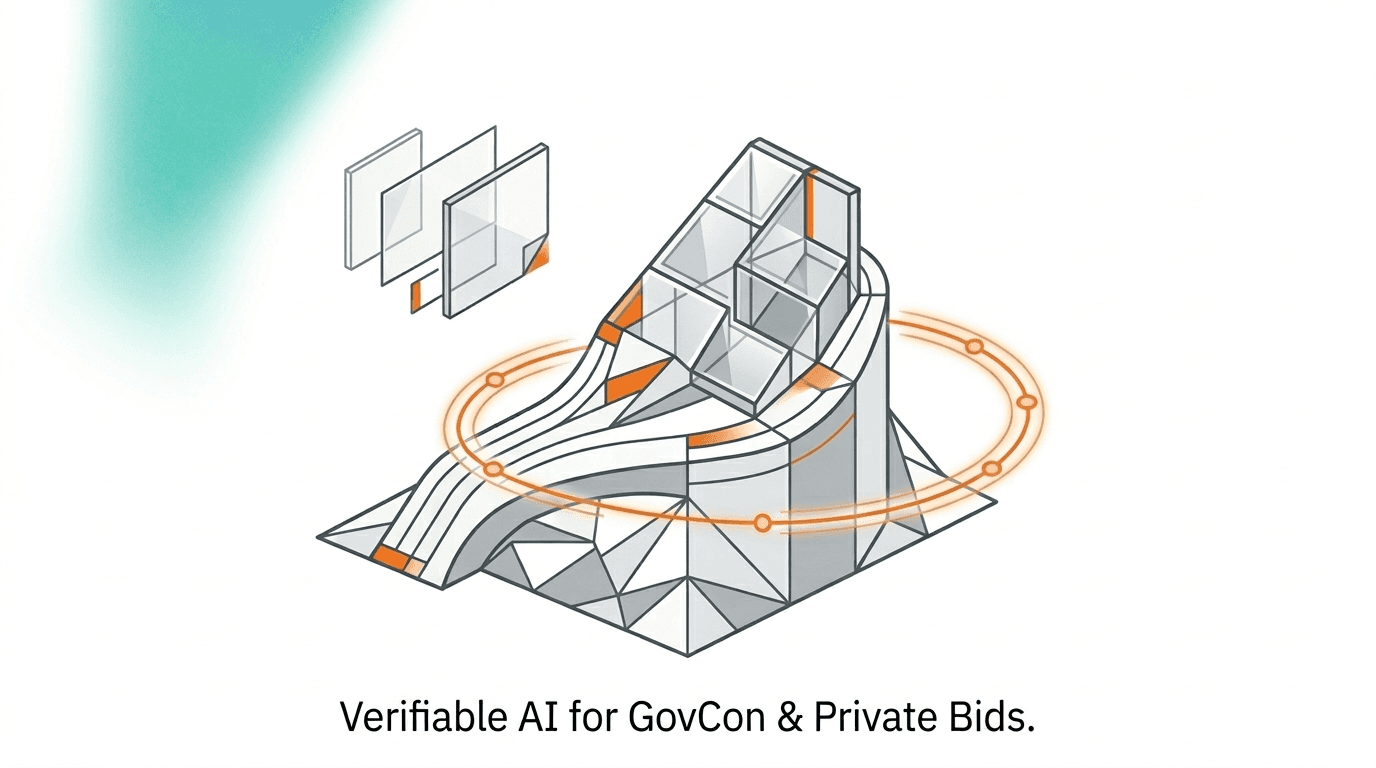
In the RFP lifecycle, "close enough" is a liability. When a proposal team relies on generic AI, they often spend more time fact-checking the output than they would have spent writing it from scratch.
At Preflight7, we believe AI should serve as a high-fidelity mirror of your firm’s actual capabilities, not a creative writer.
The Reality of "Verifiable" Intelligence
Moving away from guesswork means moving toward a Source-of-Truth architecture. Here is how we are building towards realistically applying this to the bidding process:
Direct Source Mapping: Every technical response is grounded in your uploaded past performance, project resumes, and compliance libraries. If the evidence isn't in your data, the system doesn't "fill in the gaps" with hallucinations.
Audit-Ready Citations: We move beyond the "Black Box." When the AI identifies a technical capability, it provides a digital breadcrumb back to the original document. This allows your Subject Matter Experts (SMEs) to verify accuracy in seconds, rather than hunting through old folders.
Controlled Logic: We don't use AI to "invent" strategy. We aim to use it to index and deploy your existing strategy.
Why "Good Enough" is a Risk
In GovCon, a single misinterpretation or an unverified claim can lead to a "Non-Responsive" determination. By prioritizing Verification over Automation, you protect your firm’s reputation while significantly increasing your bid capacity.
The Goal: To let your Proposal teams and Founders focus on the high-level strategy, while the AI handles the heavy lifting of evidence retrieval with complete transparency.